Hiragana and Katakana Converter
Convert hiragana to katakana, katakana to hiragana, or swap both in one pass. Halfwidth katakana can become fullwidth katakana or hiragana, and kana with a separate voiced mark are joined.
Used with "To katakana". The other directions turn halfwidth katakana into hiragana as well.
How to use
- Type or paste your text into "Text to convert"
- Under "Direction", choose "To katakana", "To hiragana" or "Swap both". "To katakana" is chosen at first
- With "To katakana", "Make halfwidth katakana fullwidth too" chooses whether halfwidth katakana becomes fullwidth. It is on at first
- The result updates whenever you change the text or a setting, and the number of converted places is shown
- Press "Copy" to copy the result
Your text is never sent outside the browser and is not saved.
Example
Enter the following text.
やまだ たろう ラーメン屋のメニュー
- To katakana:
ヤマダ タロウ ラーメン屋ノメニュー - To hiragana:
やまだ たろう らーめん屋のめにゅー - Swap both:
ヤマダ タロウ らーめん屋ノめにゅー
"Swap both" turns each hiragana into katakana and each katakana into hiragana at the same time, character by character. Kanji (屋 in the example), letters, digits, symbols and spaces stay the same in every direction, except that making halfwidth katakana fullwidth also makes the halfwidth 。 「 」 、 ・ fullwidth.
Characters it converts
- Hiragana and katakana:
ぁtoゖandァtoヶ, one for one. This includesゔandヴ, the smallゃっゎandャッヮ, andゐゑandヰヱ - Iteration marks:
ゝゞandヽヾ - The long vowel mark ー: both scripts use the same character, so it stays (
ラーメン→らーめん) - Halfwidth katakana: "To hiragana" and "Swap both" also turn halfwidth katakana such as
データinto hiragana (でーた). The halfwidth voiced mark゙and semi-voiced mark゚are joined to the character before them when the two can be one character - Halfwidth katakana to fullwidth: with "To katakana" and "Make halfwidth katakana fullwidth too" on, halfwidth katakana becomes fullwidth katakana (
データ→データ,ヷ→ヷ). The halfwidth。「」、・become the fullwidth。「」、・, and a halfwidth voiced mark after a fullwidth katakana is joined to it (ガ→ガ). With it off, halfwidth katakana stays as it is - Kana with a separate voiced mark: when
かand its voiced mark are two characters (a combining mark), as in macOS file names, they are converted as one and written joined, such asガorが. A mark on a character that is not converted stays separate - Marks that stay: the fullwidth
゛and゜typed on their own are characters in their own right, so they are not joined to the character before them (カ゛→か゛). A mark with no joined form, such as the゙inア゙, stays as well. When halfwidth katakana is made fullwidth, it becomes the fullwidth゛or゜(ア゙→ア゛)
Common uses
- Matching a furigana field: a form that asks for the reading in fullwidth katakana can take a reading you typed in hiragana, or noted down in halfwidth katakana, converted to fullwidth katakana
- Making readings consistent in hiragana: in a list of names or a reading column that mixes katakana and hiragana, "To hiragana" evens them out at once
- Making halfwidth katakana data easier to read: names exported from older systems, such as
ヤマダ タロウ, become hiragana - Trying a different look: try a heading or slogan with its hiragana and katakana swapped
FAQ
Does kanji become hiragana or katakana?
No. Choosing the reading of a kanji needs a dictionary, and this tool converts only by the one-to-one match between hiragana and katakana. When the text contains kanji, the number left as they are is shown below the result. Type the reading in hiragana or katakana, then convert it.
Why do ヵ and ヶ not become hiragana?
In words such as 霞ヶ関 and 一ヶ月, ヶ is nearly always a sign read か, が or こ, so turning it into the small hiragana ゖ would be wrong. ヵ is treated the same way. The other way round, the hiragana ゕ and ゖ do become ヵ and ヶ with "To katakana".
What happens to ヷ, ヸ, ヹ and ヺ?
They have no hiragana, so they stay as they are. The halfwidth ヷ, and ワ with a separate voiced mark, stay unchanged too. When "To katakana" makes halfwidth katakana fullwidth, though, ヷ becomes ヷ.
How do I make halfwidth katakana fullwidth?
Choose "To katakana" and turn on "Make halfwidth katakana fullwidth too" (it is on at first). Text that mixes hiragana and halfwidth katakana, such as やまだ タロウ, becomes ヤマダ タロウ in one pass. Letters, digits and spaces are not changed, so to make them fullwidth as well, or to turn hiragana into halfwidth katakana, convert to katakana first and then use the Fullwidth and Halfwidth Converter.
Can the long vowel mark ー become a vowel such as あ or い?
No. The ー in コーヒー can be read as either お or う, so it cannot be decided from the characters alone.
Is my text saved?
No. Everything runs in your browser, and it is gone when you reload the page.
- Type
- Utility
- Category
- Text
- Tags
- text
- hiragana
- katakana
- kana
- furigana
- converter
- japanese
- writing
Related apps
Case Converter
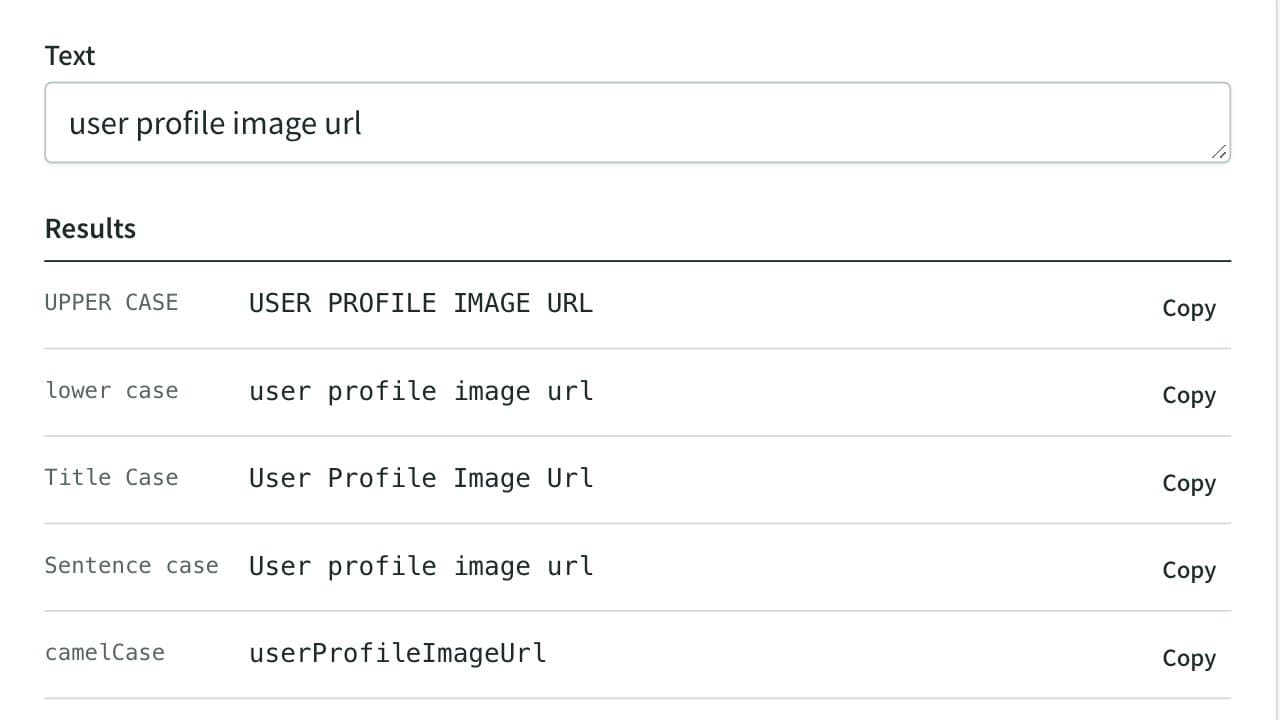
Convert text to UPPER, lower, Title, camelCase, PascalCase, snake_case, CONSTANT_CASE and kebab-case in real time. All nine results are listed in one table to compare at a glance, several lines are converted line by line, and each row has its own copy button.
Text Formatter
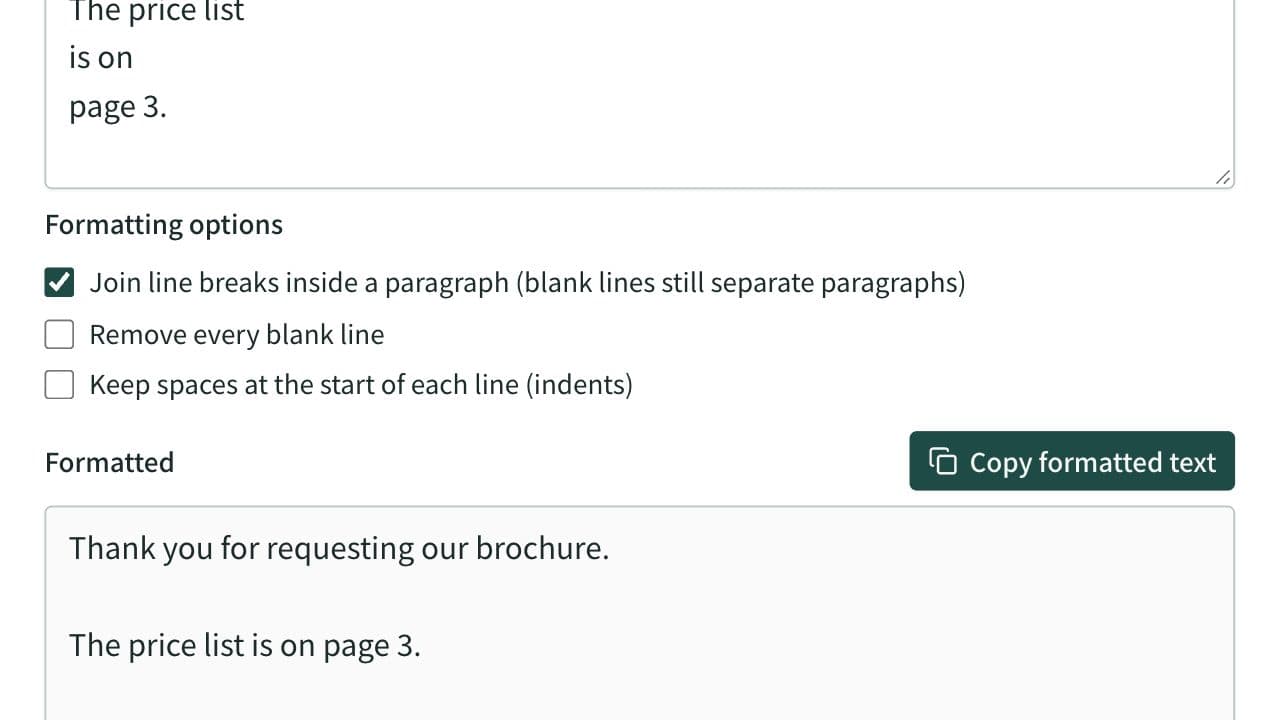
Clean up extra spaces and blank lines, optionally join the line breaks of text pasted from a PDF and remove spaces between Japanese characters, check text counts, and copy the result.
Mojibake Fixer and Text Encoding Converter
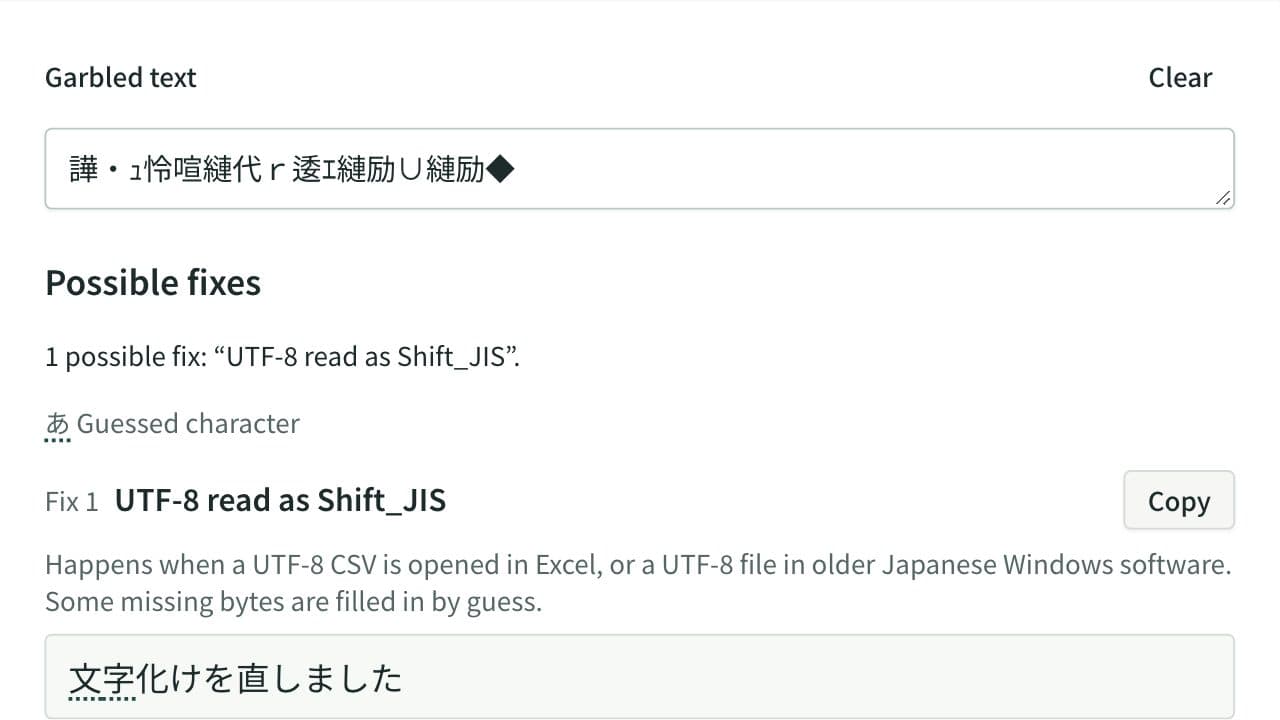
Paste garbled Japanese such as 縺薙s縺ォ縺。縺ッ or ã“ã‚“ã«ã¡ã¯ to try the common misreadings of UTF-8, Shift_JIS, EUC-JP and JIS and get the text back. It also detects the encoding of a CSV or text file and saves it as UTF-8 (with or without BOM) or Shift_JIS.